
Connection: biophilic design and neuroarchitecture
Neuroarchitecture is the science that studies how spaces affect the brain and human behavior, and biophilia is our relationship with the living things of nature. Both concepts highlight the human need to connect with the environment and with nature, which in turn increases well-being. If an organization's goal […]
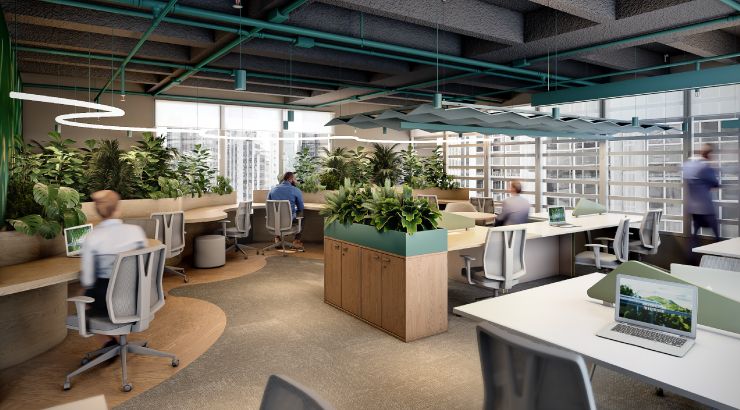
Neuroarchitecture is the science that studies how spaces affect the brain and human behavior, and biophilia is our relationship with the living things of nature. Both concepts highlight the human need to connect with the environment and with nature, which in turn increases well-being.
If an organization's goal is to make its workspaces more appealing and more natural, bringing the natural environment outside into the interior, biophilia has the power to turn them into inspiring places and foster greater connection among the people who use them.
According to the Spacestor London Design Center, biophilic design offers users a range of benefits, such as lower absenteeism, higher employee retention and gains in productivity, well-being and creativity.
In the corporate workplace, a sense of well-being and comfort comes from design elements such as vegetation and plants or images of them, organic shapes, earthy tones, decorative water features, natural light, and surface materials that imitate wood without necessarily being made of it, among others.
At a time when hybrid work remains in place, creating inspiring spaces that draw people back to the office, or bring them in more often, through architectural solutions based on biophilic design brings real gains for organizations.
Explore some of the projects designed and built by CH3 that use these concepts, and count on us to turn your corporate space into a distinctive, inspiring environment.
Frequently asked questions.
How does the article connect biophilic design and neuroarchitecture?
The article links the study of how people relate to their surroundings with the presence of natural elements in the built environment. In the office, this connection guides proposals for making spaces more welcoming.
Read the full answerWhat elements can be part of an office with biophilic design?
The article cites vegetation, images of plants, organic shapes, earthy tones, decorative water features and natural light. It also includes surface materials that evoke wood.
Read the full answerAuthor
CH3 Construtora
Your next project starts with a conversation.
Tell CH3 what your company needs to build. Let's think through the next steps together.
Talk to CH3